

A look inside one of our newest private label catalog products – a fully customizable track suit built to carry your brand.
A custom nylon tracksuit, customized from the fabric up is something your fans will treat as a collectors item. And for a merch director putting their name on an artist’s next release, that difference is the whole game. As a custom apparel manufacturer that builds artist and brand merch everyday, we design tracksuits the way they should be made: engineered to a spec, graded across every size, and consistent from the first unit to the last.
This is a breakdown of what actually goes into a premium custom tracksuit, so you can spec one that holds up on the merch table and in the mirror.
In this guide
1 Cut-and-sew vs. blanks: why it matters for a drop
2 The fabric: 100% recycled nylon ripstop
3 The jacket, engineered
4 The pant, engineered
5 Fit, grading, and consistency across the run
6 How to launch a tracksuit drop
Section 1
Cut-and-sew vs. blanks: why it matters for a drop
Decorated blanks are the backbone of merch, and they always will be. Screen printing and embroidery on a quality blank move volume and hit margin. But some pieces can leave a longer impression on your fans. A tracksuit is one of them. There is no standard catalog nylon jacket that carries a stand-up collar, a specific cuff, and your fit. You build it, or it doesn’t exist.
Cut-and-sew means the garment is constructed from flat fabric to your pattern: your silhouette, your details, your labeling. That is what makes a tracksuit read as a real product instead of a promo item, and it is exactly what an artist’s audience will pay a premium for. It also raises the stakes. Every seam, cuff, and zipper is a decision, and every one of them can go wrong at scale.

The point of this guide is to show the decisions that separate a tracksuit that survives a full run from one that embarrasses everyone at delivery.
Section 2
The fabric: 100% recycled nylon ripstop
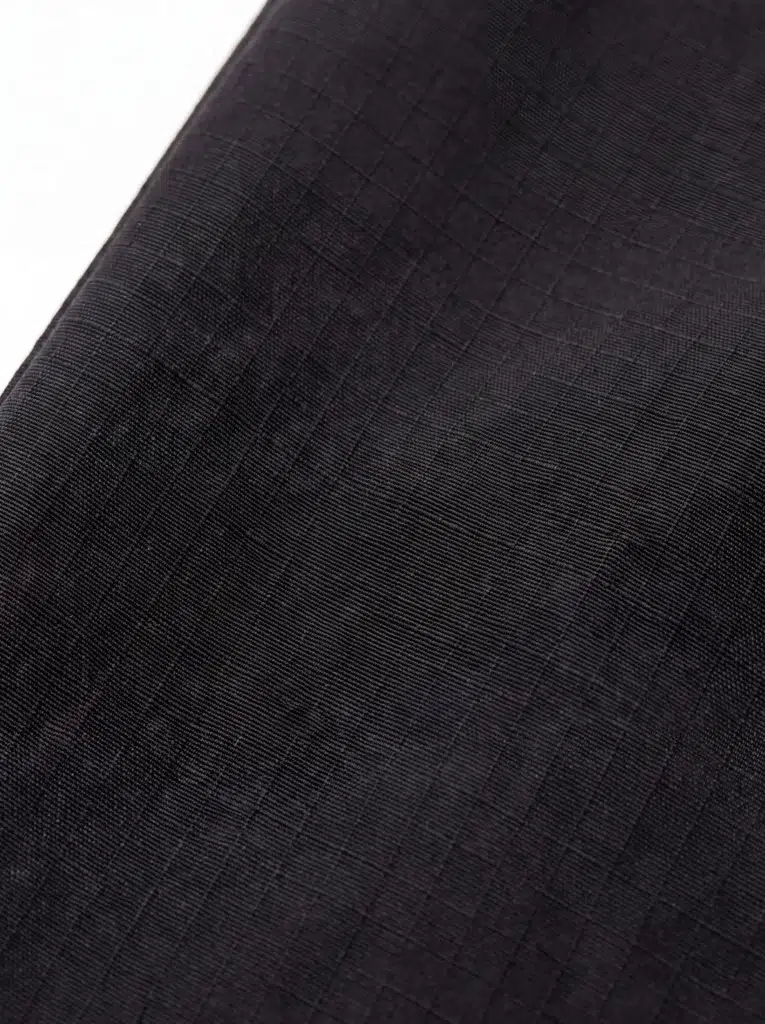
Everything starts at the fabric. This tracksuit is built from 100% recycled nylon ripstop: a matte, technical fabric with a fine grid weave that resists tearing and holds its shape wash after wash. The recycled content matters to a lot of artist audiences now, and it does not cost you performance to get it.
Ripstop is the right call for a tracksuit because it stays structured. It does not go limp or pill after a few wears, and the matte finish photographs clean instead of blowing out under a phone flash on the merch table. Your fans feel the difference the second they pick it up, and that tactile moment is what converts a browser into a buyer.
Talk to Our Team →
Section 3
The jacket, engineered
The jacket is a full-zip track jacket in a regular fit: structured, but not oversized. It runs a stand-up collar, a full-length front zip, and elasticated cuffs and waist hem so it holds a clean line whether it is zipped or open.
The details are where a jacket gets exposed. A collar that won’t stand, a zipper that catches at the throat, a hem that flares out at the bottom. We build the collar with the right interlining so it holds its shape, run a zipper rated for real use, and grade the elastic so the cuffs and hem land the same on a small and a 2XL. On a close-up, and your artist’s team will shoot close-ups, that finishing is what tells the story.

Section 4
The pant, engineered
The pant is cut to a relaxed straight leg with a slight taper: not too baggy, not too fitted. That middle-ground fit is the hardest one to hit and the one that sells, because it works on the widest range of bodies without looking like a costume.
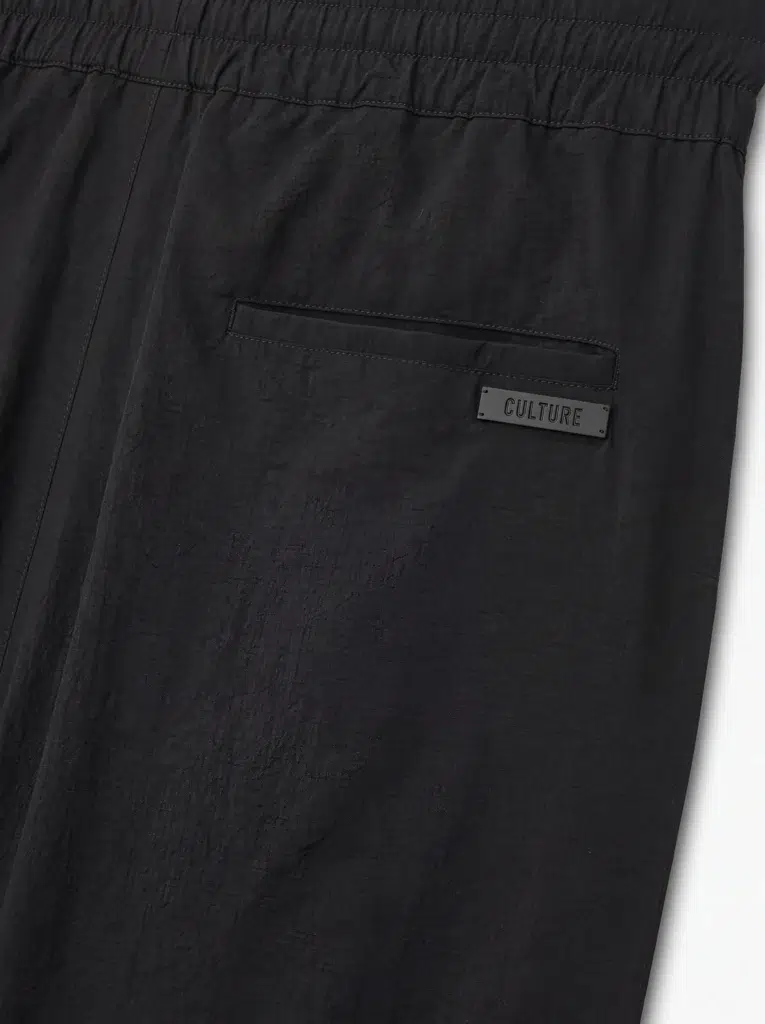
Construction is loaded: an elasticated waistband with a drawstring, two side pockets, a back welt pocket, and an elastic ankle cuff with a functional zipper. The welt pocket is a tell. It is clean, low-bulk, and it is not something you get off a catalog jogger. The zippered cuff is function and finish at once: easy on over shoes, dialed at the ankle, and consistent on every unit.


Section 5
Fit, grading, and consistency across the run
Here is where most custom drops actually break: the run does not match the sample. The fit you approved drifts because the pattern was never properly graded, or the elastic tension was never specced, or two panels came from two different fabric lots. The sample looked perfect. The 500 pieces did not.
Consistency is the entire job of a manufacturer, and it is what you are really buying. We grade the pattern across the full size range so a medium and a 2XL are the same garment at different scales, hold fabric to one spec, and QC against the approved sample rather than against a vibe. That is the difference between a drop your artist reorders and a drop you spend the next month fielding complaints about.
- Approved sample: Sign off on a physical pre-production sample before the run starts, not a photo.
- Full-range grading: Confirm the fit is graded across every size you plan to sell, not just the sample size.
- Single fabric spec: Lock one fabric, one finish, one colorway standard so units match across the run.
- QC against sample: Every unit checked against the approved sample, not a loose standard.
Section 6
How to launch a tracksuit drop
A tracksuit is not a next-day turn, and any manufacturer who tells you it is should worry you. Unique products like this in a custom division needs runway: pattern and sampling, your approval, then production. Build that timeline into your release date from the start and you avoid the two things that kill a drop, a rushed sample and a missed date.
Bring us the reference pieces you love, your fit notes, your colorways, and your quantities, and we spec it from there. Decoration options like chain stitch embroidery add another layer of finish that makes a custom tracksuit unmistakably your artist’s. The result is a piece that reads premium, survives a close-up, and lands the same across the entire run.
Build your artist’s next release with a manufacturer that delivers.
Custom nylon tracksuits and cut-and-sew merch, made start to finish at Culture Studio.